My one weird trick for managing my internet addiction
The secret is a small amount of physical friction.
There is a good chance you are a digital addict of some kind. So am I. Before I or my parents knew the damaging effects of too much screen time, I had a computer in my childhood bedroom. On it, I used to play computer games for hours. From there came the internet, and then laptops, and then social media, and then smart phones. Much has been written about how damaging technological addiction is. This post is about a trick that works for me to manage this addiction.
I carry around a scrap of paper with a password on it. I have my phone and laptop configured to require this password to access addictive websites. That’s it.1 This little piece of paper is the best trick I have discovered for controlling my internet addiction. With it, my screen time, or at least the screen time I regret, has all but vanished.
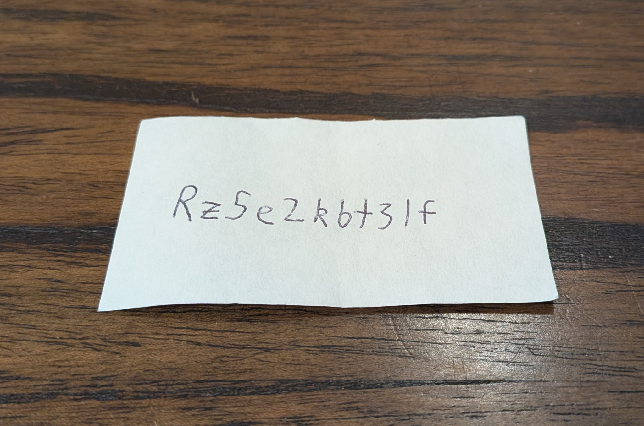 Fake example password for illustrative purposes
Your first reaction to this might be concern. After all, everyone knows that writing down a password and carrying it around with you is a Really Dumb Idea™️. Even worse, I work as a software engineer. I think about security on a daily basis. I should know better. In some ways, this is not as bad as it looks. In other ways, it is a lot worse. Allow me to explain...
Why am I doing this?
Per the American Society of Addiction Medicine, “People with addiction use substances or engage in behaviors that become compulsive and often continue despite harmful consequences”. And I think that captures my behavior. Left uncontrolled, I will mindlessly scroll the internet for hours on end - sometimes for an entire day - not going outside, not texting anyone, sometimes not even showering. In fact, before discovering this trick, I was averaging ~5 hours of screen time per day on my phone. With 8 hours working, 8 hours sleeping, and the rest of the time devoted to all other life necessities, my day was spoken for. And for what? What value did I gain from those daily 5 hours apart from a couple of dopamine hits, some useless trivia, and a simmering outrage over things I can’t control?
If you are skeptical about the need to solve this problem, I would encourage you to measure your own screen time. Most devices have the ability to do this now but you usually need to explicitly activate it. I guarantee you it will be more than you think it is.
How this trick works on my phone
I use Android2. On my phone, I have an app called LockMeOut, which blocks websites and apps. Currently, I have 52 different websites blocked. These are mostly news and social media. Once you enter a "focus time" (which I keep on permanently) those websites and apps are blocked. They make a few options available if you want to end the lockout early to access the websites you crave. The two main ones are:
- Pay LockMeOut $4.99
- Enter a password
This is where my scrap of paper comes in. The password unlocks LockMeOut, allowing me to temporarily access a website if needed.3
Why is this effective? The secret is physical friction. And just a little friction goes a long way. Believe it or not, the process of putting down my phone, finding my scrap of paper, and entering the password into LockMeOut feels deeply cumbersome in the moment - so cumbersome that I generally choose not to do it. As it turns out, my internet addiction crumbles at the insurmountable challenge of standing up. If you take nothing else away from this article, take this away: Introducing trivial physical friction can make a major dent in your internet addiction.
But why have a password at all? Once you’ve realized that a site is addictive, why not block it permanently? It is because, in our modern world, there are times when you actually do require the internet. Often, you’ll need to open Facebook to get details on the party you are attending or Reddit for an honest opinion on the skis you are considering purchasing. There are legitimate needs for most of the addictive sites on the internet. But, for every time you need to access an addictive site for legitimate reasons, there are 10 times when you are just mindlessly trying to bury a micro-boredom.
There are a few more details that make this work. First, I regularly change my password to avoid memorizing it. In practice, as long as your password is randomly generated you only need to do this once every few months. Second, I actually keep 1-2 backup copies of the same password at home in case I lose one. The password is not stored anywhere digitally. This forces me to engage in physical movement any time I need to access anything.
How this trick works on my laptop
I apply the same trick to my personal laptop. Unfortunately, the trick is both far more technical and far more stupid as far as security is concerned. In short, I utilize the "/etc/hosts" file and redirect addicting sites to "localhost". The password then serves as my sudo password for editing the file. In simpler terms, I reroute addicting websites to a black hole on my laptop and I can only change that configuration by using my password. This is, unlike the strategy I use on my phone, actually a very concerning security practice which is truthfully, a Really Dumb Idea™️. In my humble opinion, given the alternative of addictive time wasting behavior, the risk is acceptable. However, if you don’t know what you’re doing, I would not suggest doing this.
Alternative approaches
If you've made it this far, you probably hold a belief that internet addiction is a major issue and are looking for ways to solve it. But is carrying around your password on a scrap of paper really the best solution? Surely there must be better options?
Alternative 1: Pull together some self-control.
This is easier said than done. True self-control is a myth. The primary theory for why this is true is called ego depletion. In short, self-control requires cognitive energy and cognitive energy is limited and depletes over the course of the day. Since all mental tasks require cognitive energy, by practicing self-control, you paradoxically deplete your ability to do other tasks. So, if you theoretically have perfect self-control, you won’t have energy to do much else with your day.
There is some debate over how strong this effect is, and generally, we should be skeptical of all psychology research. But, I suspect if you are reading this, you have tried the self control method before and have failed. The dopamine hit of the phone, coupled with its high accessibility, is too strong for most of us to resist.
Alternative 2: Replace your phone with a dumb phone
I tried this - several times in fact. And it failed every time. But it didn’t fail for a lack of effectiveness. For one of these experiments, I both had a dumb phone and I had disconnected the internet in my apartment (I'm not a normal person). During this period, to pass the time, I found myself reading books heavily. I would end up consuming maybe one book per week. At the time, that was maybe 10 times my normal pace of reading. Under just that metric, the intervention was a stunning success.
However, the experiment ultimately failed because it was impractical in the real world - and not just for the lack of internet. Need to make a list for something? That goes in a small notebook. Want to take a picture? You'll need your Coolpix. Want to play music? Did you remember your 2006-vintage iPod shuffle?
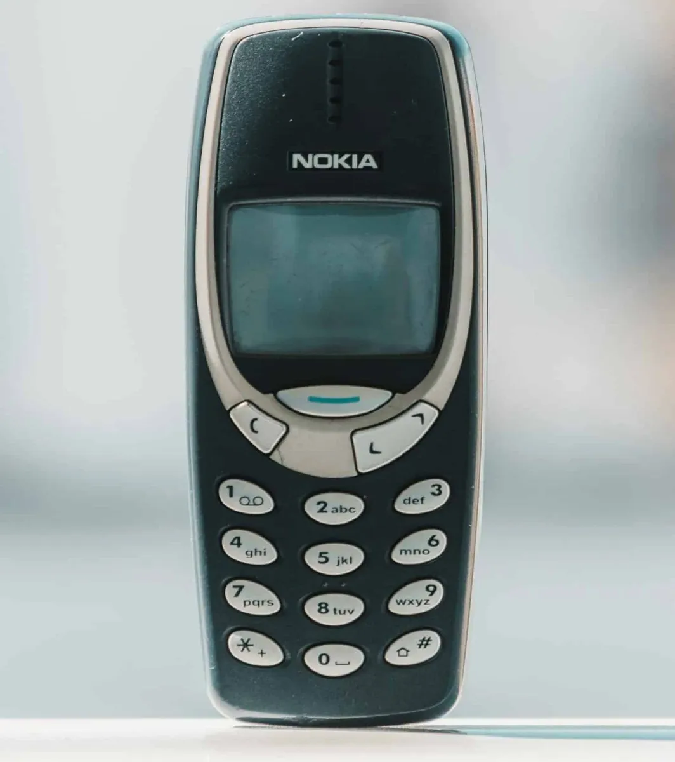 The brick
Alternative 3: Use a smartphone without a data plan
I tried this as well. This works better than replacing your phone with a dumb phone. It gives you the ability to have most of the benefits of a smart phone but without immediately accessible internet. So you can still have your maps via offline maps, but you need to download them in advance. You'll still get directions, but you won't get real-time traffic. Likewise, you’ll still get Spotify and podcasts. But again, you need to remember to download them in advance.
Still, there were issues. This strategy was also not practical in the real world. I would end up standing outside of a brewery on my corner which had free wifi whenever I needed anything.4 Even if you can accept that high level of friction, you still run up against the occasional insurmountable obstacle. For me, it was QR Codes. This was especially an issue during COVID. Want to go to a restaurant? You're either scanning that code, or you're not eating. And it’s not just restaurants. During an apartment move, I had to rent a truck from U-Haul. As part of their process for getting the keys, I had to scan a QR code. And there was no way around it. I needed a smart phone just to rent a truck.
 QR code menus were literally the insurmountable obstacle
Something is missing
While the “password on a piece of paper” trick is much more reasonable than what I was doing previously, my approach to internet addiction management is somewhere between eccentric and insane. While my setup for my phone is honestly not that bad, my setup for my laptop is both stupidly insecure and sufficiently technically difficult as to be a non-starter for most people.
Yet, somehow, this is the best way that I've found after years of searching. There are zero reasonable alternatives. All tricks, tools, and products that profess to help you manage your internet addiction are either:
- Very effective but only practical for those who reside, long term, at buddhist monasteries (like having a dumb phone and very limited internet access)
- Provide protection that is broken almost immediately by any common internet junkie (most internet blockers are trivially bypassed)
So here I stand, with my small scrap of paper which has given me back literal hours per day. With those hours, my life has gotten meaningfully better. I’ve reallocated those hours to spending more time with friends and have found a lot more time to engage in all sorts of hobbies. My scrap of paper is the best option I have to defend myself against perhaps the worst societal plague of our lives.
And if you find that statement, “the worst societal plague of our lives”, overblown, well, I’m sorry. But there are mountains of published evidence. To pull a few studies:
- In 2025, people in Great Britain spend about 7.5 hours on screens daily with 3.5 hours of that being on smartphones. Amongst 15-25 year olds, that number is closer to 4.5 hours.
- In 2023 in the US, a study found 14% of Americans meet the definition of “definite or severe” smartphone addiction while another 41% fall under “probable addiction or risk of addiction”. That leaves only 45% who are not addicted.
- In 2022, depression amongst teens was 2.5 times as prevalent as it was in 2010 (the iPhone was first released in 2007). The rise in anxiety, self harm, and suicide rates follow similar trends.
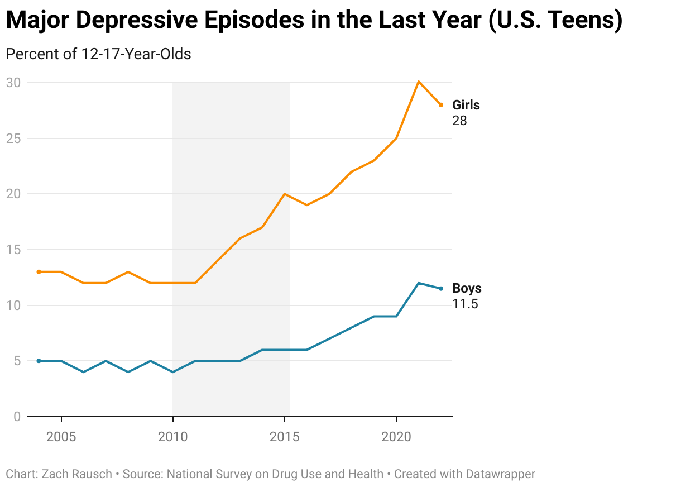 https://www.anxiousgeneration.com/research/the-evidence
As a rule, I believe our devices should enable us to live better lives. They should give us the power to do things faster and better. However, the presence of so much addictive content has reversed that. The promise of technology was a blissful state of convenience, the accumulated knowledge of the whole world at your fingertips, and the ability to talk to grandma at any time from anywhere in the world. While it is true that all of these promises were, actually, delivered, the benefits have been overshadowed by the billions of people glued to their screens, stuck in a dopamine feedback loop, depressed and barely breathing.
I would like to end this article with a pitch. This is a major opportunity for any would-be entrepreneur. Sell me a device that effectively filters out the bad parts of the internet while still allowing the good parts through. I don't care how it's done, but I'm sure it is possible through some combination of effective friction, smart filtering, and a rethinking of the underlying user interface. I would pay a lot of money for a device that blocks the addictive content online while still allowing me to live in the modern world. And I think a lot of other people would too.
-
I have some other tricks which I hope to write about eventually. But I think this is my most effective trick ↩
-
The iPhone does not allow the same level of configurability as Android. To my knowledge, on an iPhone, there is effectively no way to do what I am doing. I actually bought an Android to replace a perfectly functional iPhone for exactly this reason. Yes, I lose some social standing but I will gladly trade blue bubbles for the sake of saving literally hours of time per day ↩
-
The same password also prevents uninstallations of LockMeOut ↩
-
Yes, I was single at this time ↩